.
Garden Diary - April 2026
All content included on this site such as text, graphics and images is protected by U.S and international copyright law.
The compilation of all content on this site is the exclusive property of the site copyright holder.
Roseberry House
Saturday, 18 April 2026
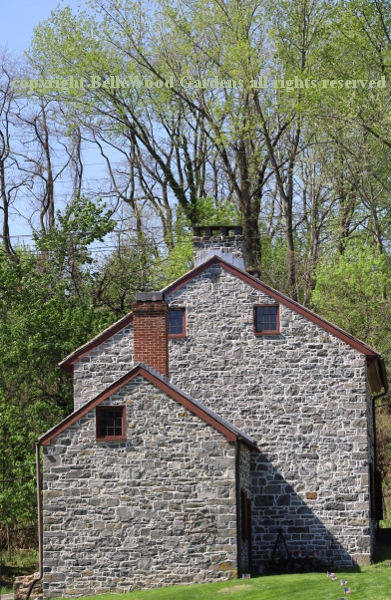
Bill said, "We are going to Phillipsburg for an open house celebration at the Roseberry house. They will have various reenactment activities along with music and an open hearth cooking demonstration." Located in Phillipsburg, Warren County, New Jersey, today visitors are invited to step back into the 18th Century at the Roseberry House as we celebrate America’s 250th.
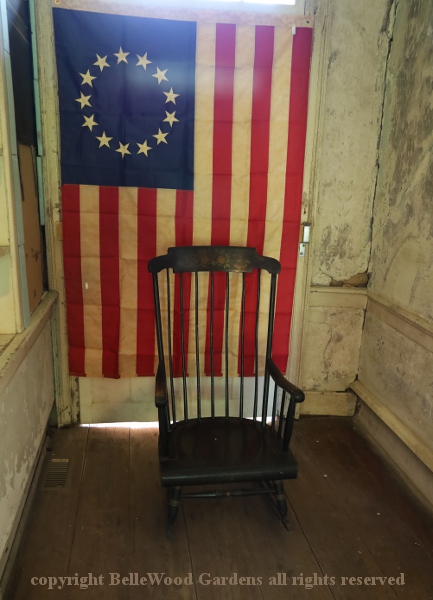
The 13-star flag was adopted in 1777, with 13 stars and 13 stripes representing
the original colonies and signifying unity, freedom, and the birth of a new nation.
Blue for perseverance and justice, red stands for valor and the white stripes for purity.
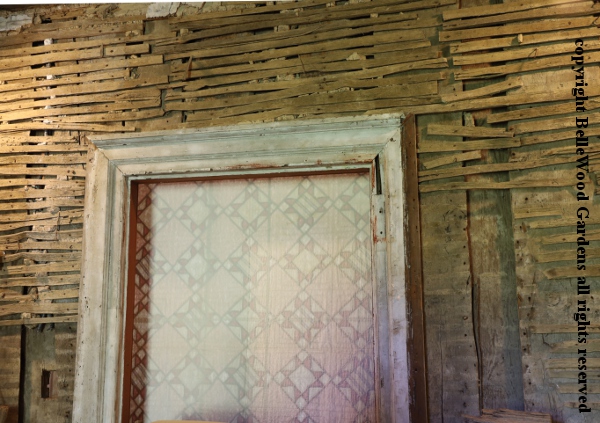
Some walls have the plaster completely missing, revealing the lathe structure beneath.
.
Descriptions for the day's events includes mention, "We will have a hands on historical experience featuring a hearthside colonial cooking demonstration . . .
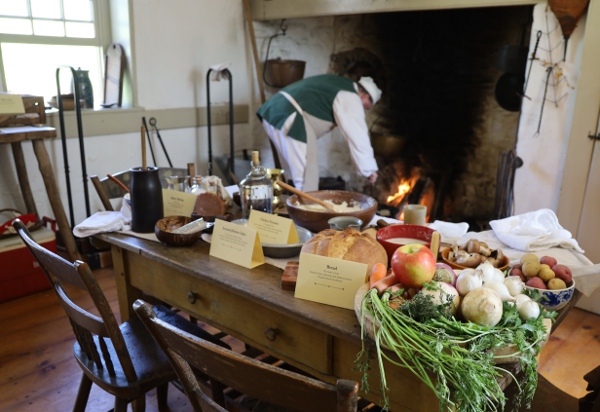
The kitchen is a separate room at the end of the house, a few steps down from the main building.
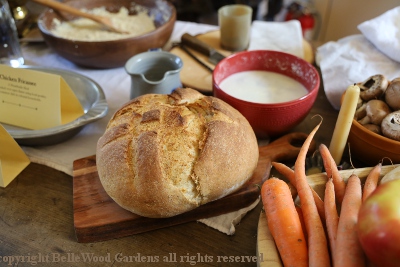
The table is overed with all sorts of food and ingredients: a beautiful loaf of bread,
fresh vegetables, butter and cream. A small butter churn awaits a young girl learning just how
the dasher goes, up and down, so it will be come butter come. But don't splash. That's not useful.
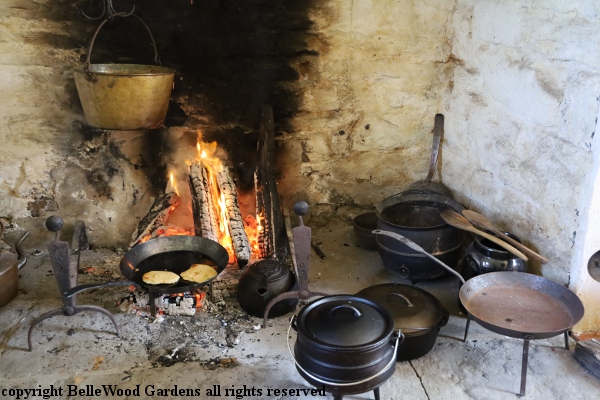
The open hearth has a fire going, and a man is making - call them journey cakes or johnny cakes -
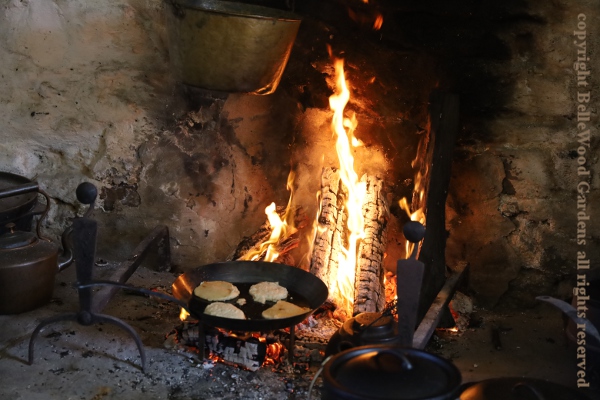
made from equal parts cornmeal and boiling water, some sugar and a little salt. Serve warm with butter or cooled for travel. A richer version would be made with scalded milk
and a little butter or bacon fat. With a smile the cook mentioned that the first pancakes were "La première crêpe est pour le chien," always a bit lumpy, a bit burned and could be fed to the dog.
 .
.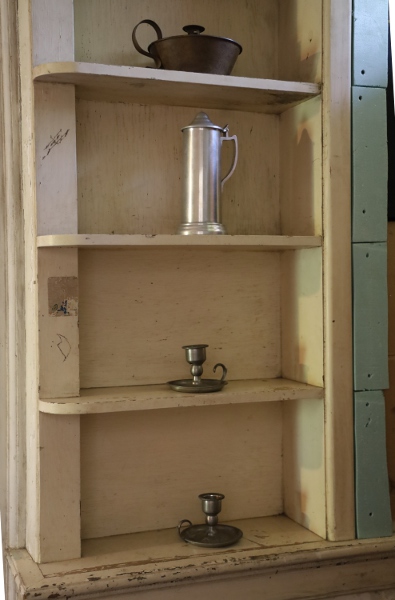
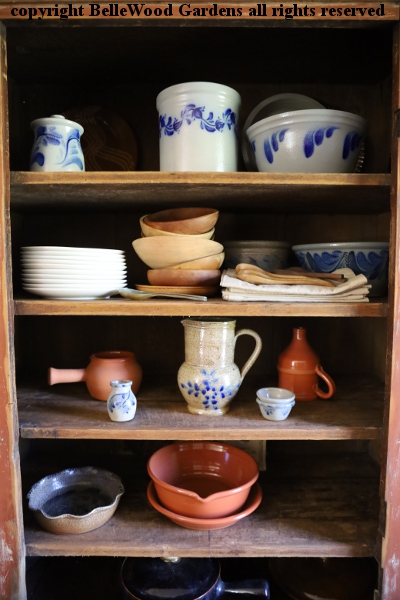
A cupboard with some small salt glaze crocks and pots, red ware,
wooden bowls and more. Another cupboard with pewter candlesticks.
Several small dishes on a counter had samples "of colonial appropriate light refreshments
like unfiltered apple juice, root beer, dried fruits and dried meats."
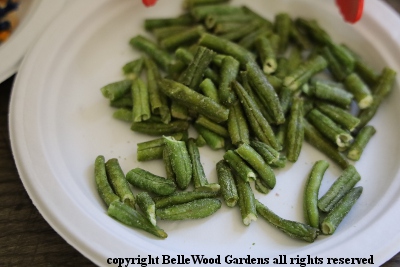
Leather britches beans. Do you know about them? I think of this more as
an Appalachian food preservation technique than New England. String beans
up with needle and thread, then hang to dry. Need long slow cooking to serve.
A couple of years ago I asked Professor David S. Shields, author of Southern Provisions: The Creation and Revival of a Cuisine and Taste the States: South Carolina's Signature Foods, Recipes, and Their Stories. He told me that "The leather britches were not salted, but threaded and hung up to dry. I have heard of putting Kentucky Wonder beans in the salt ferment of sauerkraut; but this was decidedly a local and restricted practice. Hope this helps. The Rattlesnake bean was another bean prepped as a leather britches variety."
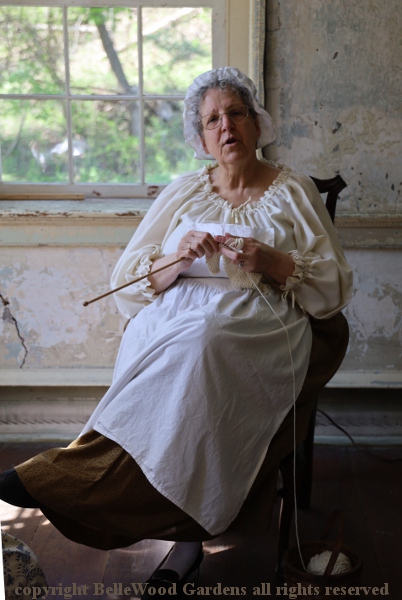
We're told "You’ll also find classic skills on display like knitting, crafts and a classic hunter’s presentation"
 .
.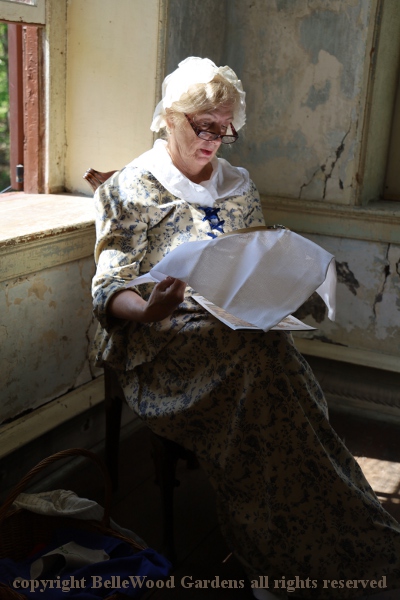
Two women sit, relaxed and comfortable, one knitting and the other embroidering. Fibers used
would be wool from local sheep, and flax, retted and spun for linen. Cotton would be scarce.
A hunter shares information with us about his clothing and his weapons. He might be married to
a Lenape woman, who would make his moccasin. After all, he would not wear shoes with buckles
when hunting in the woods. He'd string a Lenape style gorget around his neck, and a turtle icon,
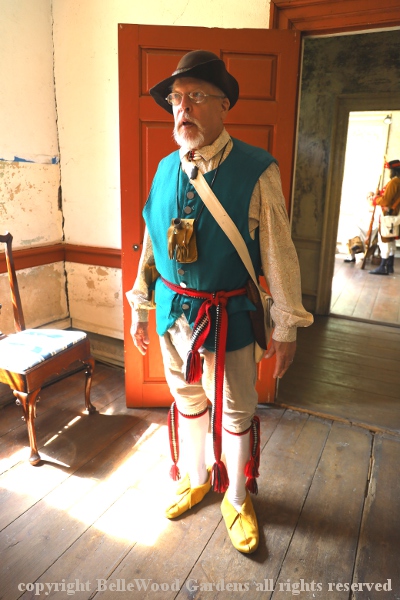
if she was of the turtle clan. She'd weave for him a sash and garters in
the Lenape colors of red, black, and white. Money is scarce so he would
reuse handmade soft lead spherical balls in a muzzle-loading flintlock musket.
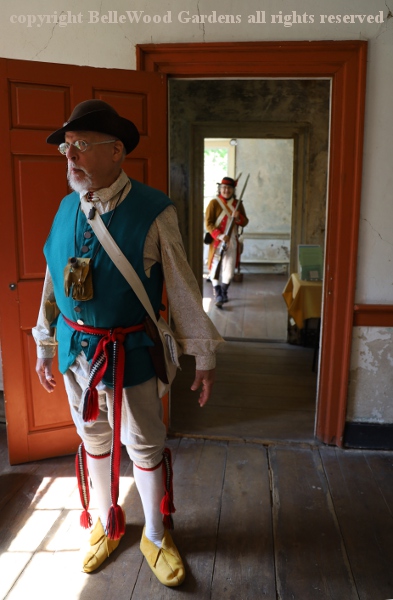
A militiaman, talking to the knitting / embroidering / crafting ladies, notices our talk
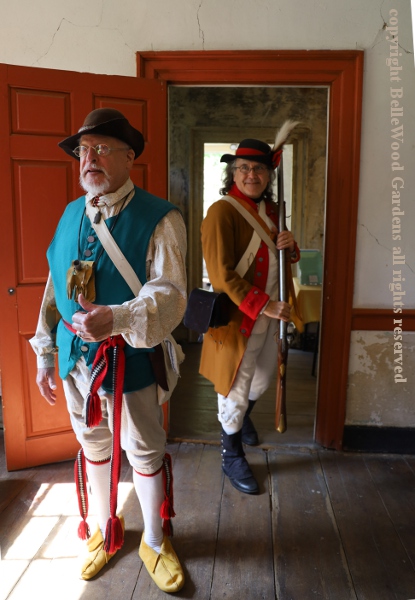
and comes through the hallway into the room to join the conversation. Fascinating!
An interesting day. Perfect for families, history lovers and anyone interested in everyday life in early America.
Free to the public. Sponsored by the Phillipsburg Area Historical Society.
If you have any comments or questions, you can e-mail me: jgglatt@gmail.com
Back to April
Back to the main Diary Page